
A strategic plan is a vital tool for any nonprofit, providing a clear roadmap for achieving your mission. It helps align your team, direct resources effectively, and measure progress. Whether you’re just starting or looking to refine your approach, developing a strategic plan can significantly enhance your nonprofit’s impact.
Why Develop a Strategic Plan?
1. Provides Direction and Focus
A strategic plan sets the course for your nonprofit’s future. It helps define your mission, vision, and values, ensuring that everyone in your organization is working towards the same goals.
Example: Homeless Shelter Expansion
If your nonprofit aims to expand services to the homeless, a strategic plan can outline specific goals, such as opening new shelters, increasing bed capacity, or enhancing support services. This focus ensures all efforts contribute to the overall mission.
2. Aligns Resources and Efforts
With a strategic plan, you can allocate your resources—time, money, and people—more effectively. It helps prioritize initiatives that will have the most significant impact.
Example: Resource Allocation in a Youth Program
For a nonprofit running a youth mentorship program, a strategic plan might prioritize funding for training mentors, expanding outreach, and developing new program materials, ensuring resources are used where they’re most needed.
3. Enhances Accountability and Performance
A strategic plan includes measurable objectives and timelines. This accountability helps track progress, celebrate successes, and identify areas needing improvement.
Example: Measuring Success in Environmental Advocacy
An environmental nonprofit might set objectives to reduce local pollution levels by a certain percentage within five years. Regularly reviewing these goals ensures the organization stays on track and adjusts strategies as needed.
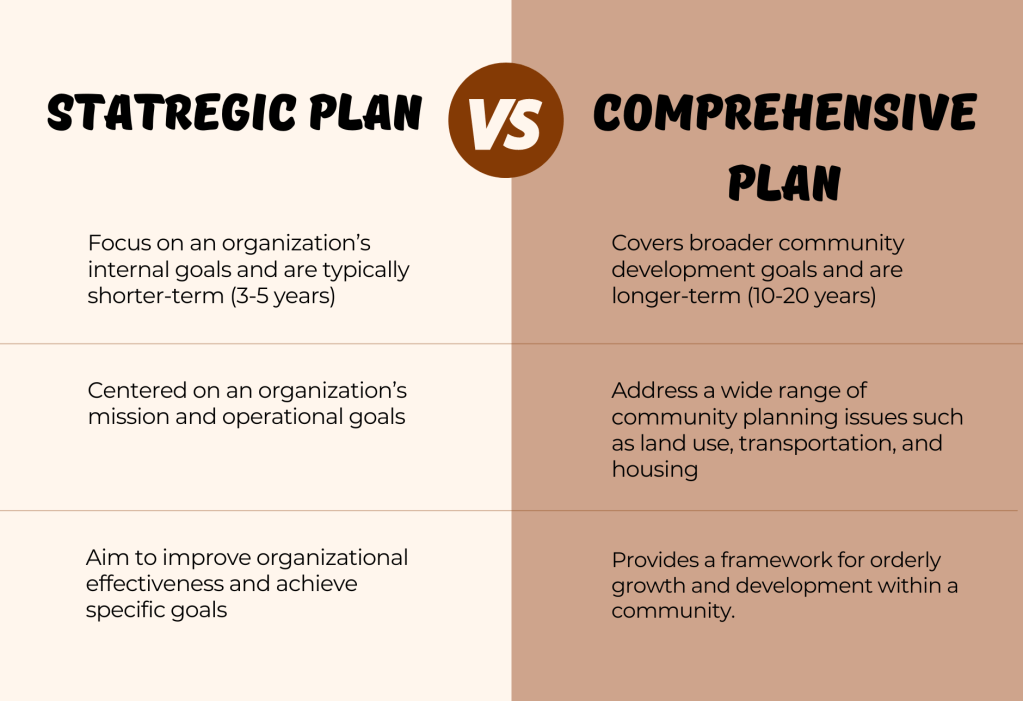
Is a Strategic Plan the Same as a Comprehensive Plan?
While a strategic plan and a comprehensive plan may seem similar, they serve distinct purposes and are used in different contexts. Understanding these differences is crucial for effectively planning and achieving your nonprofit’s goals.
How to Develop a Strategic Plan
1. Gather Your Team
Involve key stakeholders in the planning process. This includes board members, staff, volunteers, and even beneficiaries. Their insights and perspectives are invaluable.
Example: Inclusive Planning Process
For a nonprofit providing community healthcare, engaging doctors, nurses, administrators, and patients in the planning process ensures the plan addresses real needs and leverages diverse expertise.
2. Conduct a SWOT Analysis
A SWOT analysis helps identify your nonprofit’s Strengths, Weaknesses, Opportunities, and Threats. This analysis provides a comprehensive understanding of your current situation and future potential.
Example: SWOT Analysis in Animal Rescue
An animal rescue organization might find that its strengths include a dedicated volunteer base and strong community support, while weaknesses might involve limited funding. Opportunities could include partnerships with local businesses, and threats might involve changes in animal welfare laws.
3. Define Your Mission, Vision, and Values
Clearly articulate your nonprofit’s mission (what you do), vision (what you aim to achieve), and values (the principles guiding your work).
Example: Crafting a Mission Statement
A food bank might have a mission to “provide nutritious food to families in need,” a vision of “a hunger-free community,” and values that include “compassion, dignity, and inclusivity.”
4. Set SMART Goals
Your strategic plan should include Specific, Measurable, Achievable, Relevant, and Time-bound (SMART) goals. These provide clear targets and timelines for your initiatives.
Example: SMART Goals for Education Nonprofit
A nonprofit focused on education might set a goal to “increase the high school graduation rate among program participants by 20% within three years.” This goal is specific, measurable, achievable, relevant, and time-bound.
5. Develop Action Plans
Break down your goals into actionable steps. Assign responsibilities, set deadlines, and outline the resources needed for each task.
Example: Action Plan for a Clean Water Initiative
If a nonprofit’s goal is to provide clean water to rural communities, an action plan might include steps like securing funding, purchasing filtration systems, training local technicians, and monitoring water quality.
6. Monitor and Adjust
Regularly review your strategic plan’s progress. Be prepared to adjust strategies based on what’s working and what isn’t.
Example: Quarterly Reviews
A nonprofit running an after-school program might hold quarterly reviews to assess enrollment numbers, participant feedback, and educational outcomes, making adjustments as needed to improve effectiveness.

Who Should Be Involved
Board of Directors
The board provides governance and oversight, ensuring the strategic plan aligns with the nonprofit’s mission and long-term goals.
Executive Leadership
Leaders like the Executive Director drive the planning process, integrating insights from all parts of the organization.
Staff and Volunteers
Their on-the-ground experience offers valuable insights into practical challenges and opportunities.
Community and Beneficiaries
Engaging the community and beneficiaries ensures the strategic plan addresses their needs and gains their support.
Conclusion
Developing a strategic plan is essential for guiding your nonprofit toward achieving its mission. It provides direction, aligns resources, and enhances accountability. By involving key stakeholders, conducting thorough analysis, and setting clear goals, you can create a plan that drives your organization forward. Embrace these steps to develop a strategic plan that inspires growth and maximizes your impact.
For more detailed guidance on strategic planning, explore resources from Nonprofit Hub and BoardSource.
Find this helpful? Consider sharing it with your peers:
Ready to make a greater impact? Sign up for expert tips and insight delivered to your inbox:


Leave a Reply